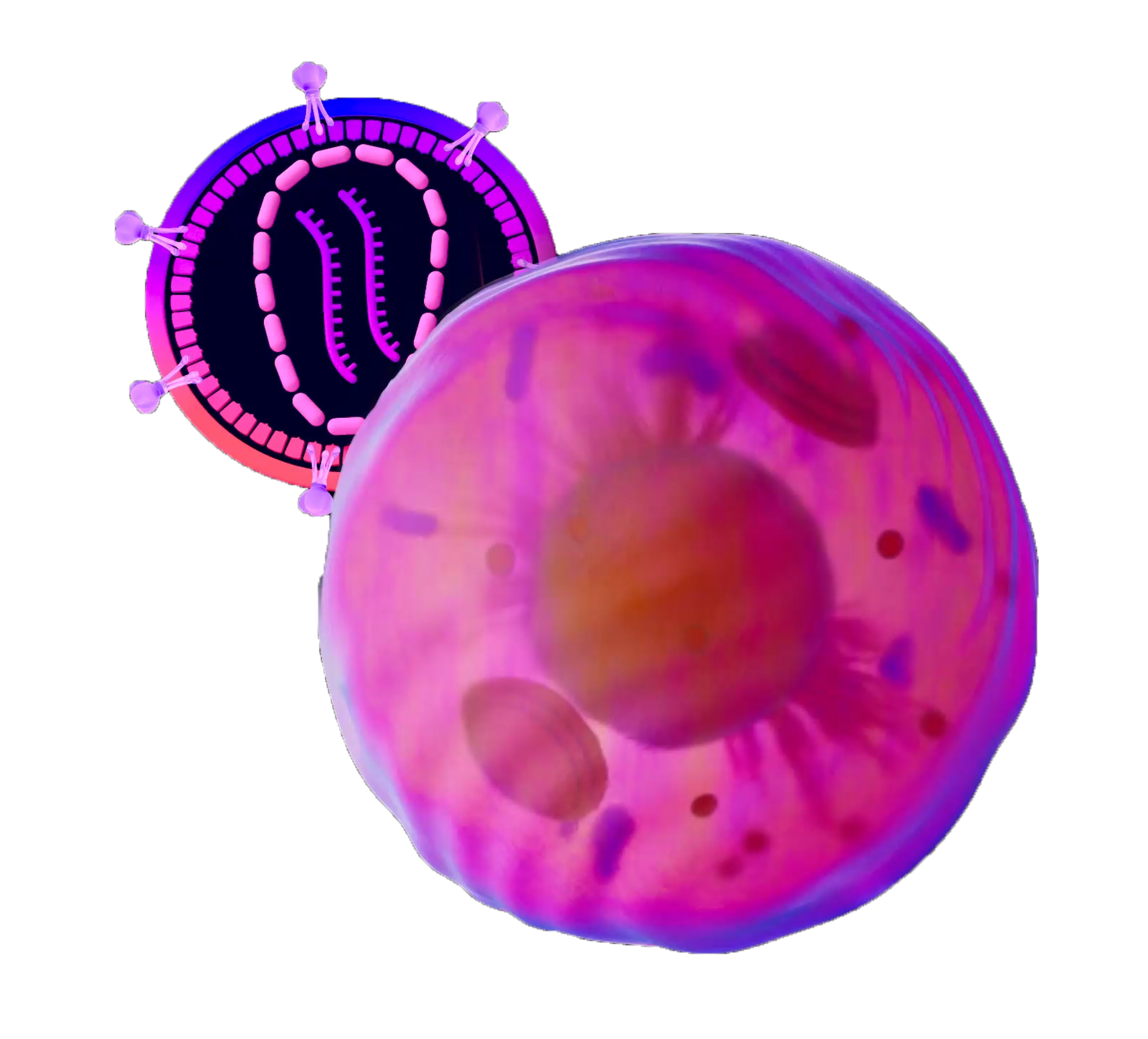
Collaboration connects Asimov’s genetic design and cell line technologies with Lonza’s process development, scale-up and GMP manufacturing expertise
Integrated approach brings manufacturability considerations earlier into cell line development streamlining path to clinical and commercial production
Companies will work together to support scalable and reproducible stable production approaches to reduce cost of goods for emerging in vivo lentiviral vector applications
Basel, Switzerland, and Boston MA, USA, 2 October 2026 – Lonza, the world's leading contract development and manufacturing organization (CDMO), and Asimov, the company building an AI-native synthetic biology platform to advance therapeutic development, announced today a strategic collaboration to advance lentiviral vector (LVV) manufacturing for emerging in vivo applications.
The collaboration brings together Asimov’s LV Edge system cell line technologies with Lonza’s expertise in process development, scale-up, analytics and GMP manufacturing. By connecting early design decisions with development and manufacturing considerations, the collaboration helps developers incorporate manufacturing considerations earlier in development, creating a stronger foundation for scalable clinical and commercial production.
Most current methods of lentiviral vector production still depend on multi-plasmid transient transfection, which limits scalability and consistency. Stable production systems for lentiviral vector manufacturing can potentially enable scalable, reproducible and controlled product profiles for lentiviral vectors, unlocking emerging applications including in vivo LVV programs.
For in vivo developers, Asimov and Lonza’s combined capabilities address the specific performance and consistency requirements of in vivo LVV applications, supporting stable, program-specific production strategies designed to improve scalability and reproducibility while giving developers earlier visibility of manufacturability considerations. The same approaches can also support ex vivo LVV programs.
Daniel Palmacci, Head of Specialized Modalities, Lonza, commented: “The development of in vivo lentiviral therapies requires design and manufacturing strategy to be considered together from the earliest stages. By combining Asimov’s design and cell line technologies with our process development and GMP manufacturing expertise, we can bring manufacturability considerations earlier into development and provide customers with a more connected path towards scalable clinical and commercial manufacturing.”
Alec Nielsen, co-founder and CEO, Asimov, commented: “In vivo lentiviral therapies turn the vector from a manufacturing reagent into the drug itself. This raises the bar for titer, product quality, and scale. By pairing LV Edge stable cell lines with Lonza's manufacturing expertise, developers can get a scalable path from sequence to clinic.”
As the collaboration progresses, Lonza and Asimov will continue to define a feasibility-first framework, spanning transgene optimization, cell line development, process development, advanced analytics, scale-up, GMP manufacturing and CMC readiness. Learn more here Lonza|Asimov
About Asimov
Asimov’s mission is to advance humanity’s ability to design living systems, enabling biotechnologies with outsized societal benefit. The company is developing a synthetic biology platform – from cells to software – to design and manufacture next-generation therapeutics, including biologics, cell/gene therapies, and RNA through a combination of products, services, and collaborations.
Founded by bioengineers from MIT and Boston University and headquartered in Boston, the company has raised over $200 million from top institutional investors including Andreessen Horowitz, CPP Investments, Horizons Ventures, and Fidelity Management & Research Company. For more information, visit www.asimov.com.
Highlights
Virtual Private Network (VPN): Users connect to the cluster, provide some credentials and are then able to access internal tools.
Single Sign-On: A tool like Kerberos allows you to use the same account across various components.
Home-grown user accounts: You implement an authentication system and users have a separate username/password for your computing infrastructure.
Asimov, the synthetic biology company building a full-stack platform to program living cells, announced today it has been awarded a contract as part of the Defense Advanced Research Projects Agency (DARPA) Automating Scientific Knowledge Extraction (ASKE) opportunity.
Through ASKE, Asimov will work to develop a physics-based artificial intelligence (AI) design engine for biology. The goal of the initiative is to improve the reliability of programming complex cellular behaviors.
“To achieve truly predictive engineering of biology, we require dramatic advances in computer-aided design. Machine learning will be critical to bridge genome-scale experimental data with computational models that accurately capture the underlying biophysics. As genetically engineered systems grow in complexity, they become difficult for humans to design and understand. For simple genetic systems with only a couple of genes, synthetic biologists typically use high-throughput screening and basic optimization algorithms. But to engineer more complex applications in health, materials, and manufacturing, we need radically new algorithms to intelligently design the DNA and simulate cell behavior.”
Alec Nielsen, Phd, Asimov CEO
Over the past 50 years, DARPA has been a world leader in spurring innovation across the field of AI, including statistical-learning and rule-based approaches. We are proud to work with DARPA to advance the state-of-the-art in AI-assisted genetic engineering.
Asimov’s founders previously built a hybrid genetic engineering and computer-aided design platform called Cello to program logic circuit behaviors in cells. The ASKE opportunity will seek to support an ambitious expansion in the types of biological behaviors that can be engineered. Asimov’s approach will leverage “multi-omics” cellular measurements, structured biological metadata, and novel AI architectures that combine deep learning, reinforcement learning, and mechanistic modeling. Over the past year, the company has ramped up hiring in experimental synthetic biology, machine learning, and data science to accelerate development of their genetic design platform.
Highlights
Headering 3
DARPA recently announced a multi-year investment of $2B into innovative artificial intelligence research called the AI Next campaign. A part of this wide-ranging AI strategy is DARPA’s Artificial Intelligence Exploration program, which was developed to help expeditiously move pioneering AI research from idea to exploration in fewer than 90 days. DARPA’s ASKE opportunity is part of this program and is focused on developing AI technologies that can reason over rich models of complex systems.
“Over the past 50 years, DARPA has been a world leader in spurring innovation across the field of AI, including statistical-learning and rule-based approaches. We are proud to work with DARPA to advance the state-of-the-art in AI-assisted genetic engineering.”
Alec Nielsen, PhD, Asimov CEO
Share:
This is some text inside of a div block. Great
Share:
Contact us
Chat with our team
Thank you! Your submission has been received!
Oops! Something went wrong while submitting the form